

Despite the strong scientific evidence for the health benefits of whole grains¹, many people across Europe still eat too little of them. And the same goes for dietary fibre: across Europe, average daily intakes fall short of recommendations.
Eating more whole grains could help close this fibre gap. So how can we encourage people to make them a bigger part of their everyday diets?
Food manufacturers can play an important role in making this happen, from improving familiar favourites to developing entirely new products.
How Can Food Companies Make Whole Grains an Everyday Choice?
Here are three ways to get started:
1. Make familiar favourites more nutritious. Start with the foods people already enjoy and incorporate whole grain ingredients into favourites such as granola, baked goods, snack bars and smoothies. This can help consumers increase their fibre intake without making major changes to their eating habits.
2. Explore opportunities in satiety and weight management. Growing interest in foods that help people feel fuller for longer creates opportunities for product development. Oat fibre can be incorporated into cereals, baked goods and beverages developed with satiety in mind.
3. Make taste and texture a priority. Choose ingredients and formulations that deliver the taste and texture consumers expect. Understanding how fibre-rich ingredients behave during processing helps create whole grain products that people genuinely enjoy eating.
At Raisio, we combine our long-standing expertise in grains and oats with our experience in developing nutritious, great-tasting foods. We help food manufacturers explore the potential of oat ingredients and find suitable solutions for different applications.
Closing the Fibre Gap
According to the European Food Safety Authority (EFSA), 25 grams of fibre a day is considered an adequate intake for normal bowel function for adults. Yet a review of dietary surveys across Europe found that average daily intakes ranged from 18 to 24 grams for men and 16 to 20 grams for women².
This difference between actual and recommended fibre intake is known as the fibre gap.
Whole grains are an important source of dietary fibre. Unlike refined grains, they retain all three parts of the grain: the fibre-rich bran, the nutrient-rich germ and the starchy endosperm. As a result, whole grains provide more fibre, B vitamins and minerals than refined grains.
💡 Increasing whole grain consumption is therefore one way to help close the fibre gap and improve the nutritional quality of our diets.
Why Whole Grain Oats Deserve a Closer Look
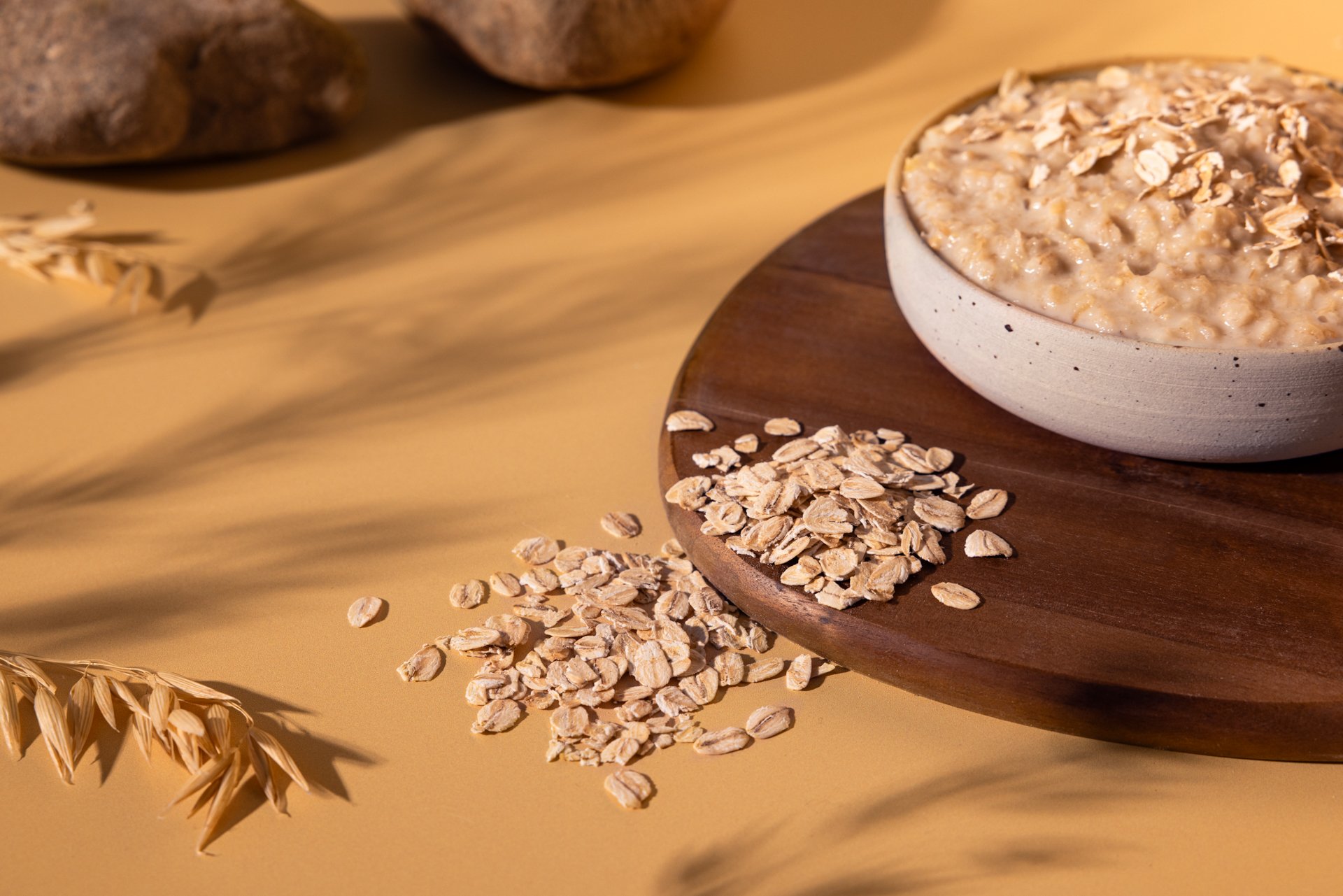
Whole grain oats are a nutritional powerhouse. They're rich in fibre, including beta-glucan, a type of soluble fibre with well-documented health benefits³.
According to analyses conducted by Raisio, 100 grams of whole grain oats contain approximately 11 grams of fibre, including 4.6 grams of beta-glucan. Whole grain oats also provide protein, B vitamins and minerals.
🌾 Oats also have a practical advantage: they are commonly used in their whole grain form. Whether as oat flakes, cut oat kernels or whole grain oat flour, these ingredients retain the nutritional benefits of the whole grain. This makes oats a versatile ingredient for a wide range of food applications.
How Oat Beta-Glucan Supports Satiety
One of the most interesting benefits of oat fibre is its potential to help us feel fuller for longer. This is particularly relevant as consumers show growing interest in foods that support satiety and weight management.
The beta-glucan in oats forms a thick, gel-like substance in the digestive tract, slowing stomach emptying and absorption of nutrients. This can contribute to a longer-lasting feeling of fullness after meals.
💡 Studies have shown that meals containing oat fibre can lead to greater feelings of fullness and reduced hunger compared with meals without it⁴.
Feeling satisfied after a meal can also make it easier to manage hunger between meals and avoid unnecessary snacking. This is particularly interesting from a weight management perspective, where appetite control plays an important role.
With more consumers looking for foods that keep them feeling full for longer, oat fibre has plenty to offer.
Food manufacturers can tap into this growing demand by incorporating oat fibre into products ranging from breakfast cereals and baked goods to beverages.
Making Healthy Choices More Tempting
The nutritional benefits of whole grains are clear, but knowing that a food is good for us doesn't necessarily mean we'll choose it.
Taste, texture, familiarity and convenience all influence what we put in our shopping baskets and, more importantly, which products we keep coming back to.
The key is to create whole grain products that taste great, are convenient and feel familiar to consumers, so that choosing whole grains becomes an easy and enjoyable part of everyday eating.
Oats are a great ingredient for this. Their mild flavour makes them easy to incorporate into different foods. And with a wide range of oat ingredients available, there are plenty of possibilities for creating nutritious, great-tasting products.
Working with fibre-rich ingredients also requires technical expertise, as fibre can affect a product's texture and how it behaves during processing. Understanding these properties helps manufacturers get the formulation right and create whole grain products that consumers genuinely enjoy eating.
Sometimes eating more whole grains can be as simple as finding them in more of the foods we already love.
Sources:
¹European Commission, Knowledge for Policy: Whole grain
²European Food Information Council (EUFIC): Recommended daily intake of fibre and fibre-rich foods
³Commission Regulation (EU) No 432/2012
⁴Nutrition Reviews, Volume 84, Issue 1, January 2026, Pages 47–68, https://academic.oup.com/nutritionreviews/article/84/1/47/8196856